
Broadcast and event networks
We build networks for live broadcasts of concerts, performances, and university events, in up to 4K resolution.
Live events
When the broadcast cannot be run again
In a live broadcast, viewers see a network hiccup the moment it happens, and the event cannot be replayed. That is why broadcast traffic has to be planned in advance.
Concerts and performances
The start time is fixed, and picture and sound stream out to the internet without a break. If the upload stalls, viewers get a choppy picture, and there is no making up for it afterward.
University events
While a conference or guest lecture is being broadcast, teaching traffic and wireless network traffic may run over the same internet connection. The broadcast needs room within that traffic too.
Permanent studio
Where broadcasts happen regularly, studio traffic can get its own priority on the network.
The network side
What goes into a broadcast-ready network
Broadcast quality depends on how the network handles the stream alongside all the other traffic. We build it from the elements below, and each one is also a separate service of ours.
A dedicated segment for the broadcast
We separate broadcast traffic from the rest of the network, so traffic from the audience or the office computers does not mix with it.
Priority toward the internet
On the firewall, we rank outbound internet traffic with bandwidth control (Traffic Shaping), and the priorities change dynamically with the load.
Multiple internet lines in one zone
We combine lines from several providers into one SD-WAN zone with its own rules. This supports availability and load balancing, and critical traffic gets precedence.
Separate Wi-Fi for guests
At an event, several hundred guest devices may connect at once. Guests, staff, and devices each get a separate wireless network.
Deliverables
What you get at the end
items handed over
- Assessment of broadcast requirements and venues
- Separation and prioritization of broadcast traffic
- Installation and test broadcast
- Documentation
References
Where broadcasts run alongside everyday traffic
Both networks are built on Fortinet equipment.
-
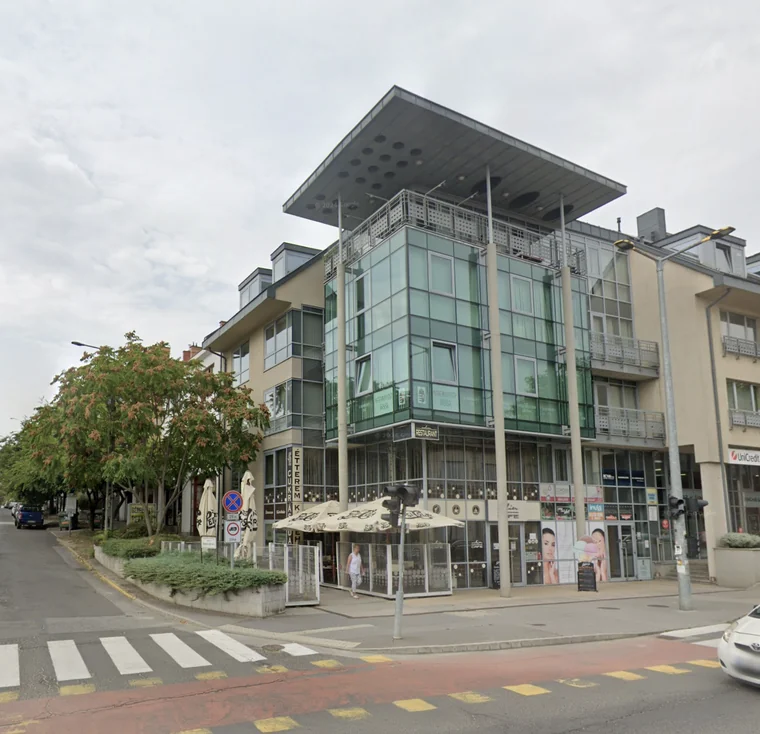
Hungarian Dance University
On the network shared by the university, its secondary school, and its dormitory, a key goal was to make sure the online broadcasts published to the internet always get the bandwidth they need.
Result 4K online broadcasts run without disruption alongside everyday teaching traffic.
-
Municipality of Gödöllő
One network serves office work, services for residents, and online broadcasts. The wired and Wi-Fi networks are segmented: every group, building, and function has its own VLAN.
Result Network bandwidth grew by an order of magnitude, and response times for reaching the servers and the internet went down.
Frequently asked questions
The questions we hear most
How much bandwidth does a live broadcast need?
It depends on the encoder, the resolution, and the configured bitrate, so we determine the exact figure during the assessment. For a live broadcast the upload direction is what matters, because the signal leaves the venue and goes out to the internet.
What is the test broadcast for?
After installation we run a test broadcast. It shows whether the signal goes out at the planned quality and whether the priority rules hold while the rest of the network is under load. If something does not work as planned, it can still be fixed before the event.
Does the broadcast slow down the rest of the network?
Under load, the priority rules give the broadcast precedence, and the rest of the traffic shares the remaining capacity. How much goes to the broadcast is set according to the requirements defined in the assessment.
Do you also build a network for a single event?
Yes. Besides permanent venues, we also build temporary networks for a single event. In that case too, we assess the broadcast requirements and the venue, separate the broadcast traffic, and run a test broadcast before the event.